
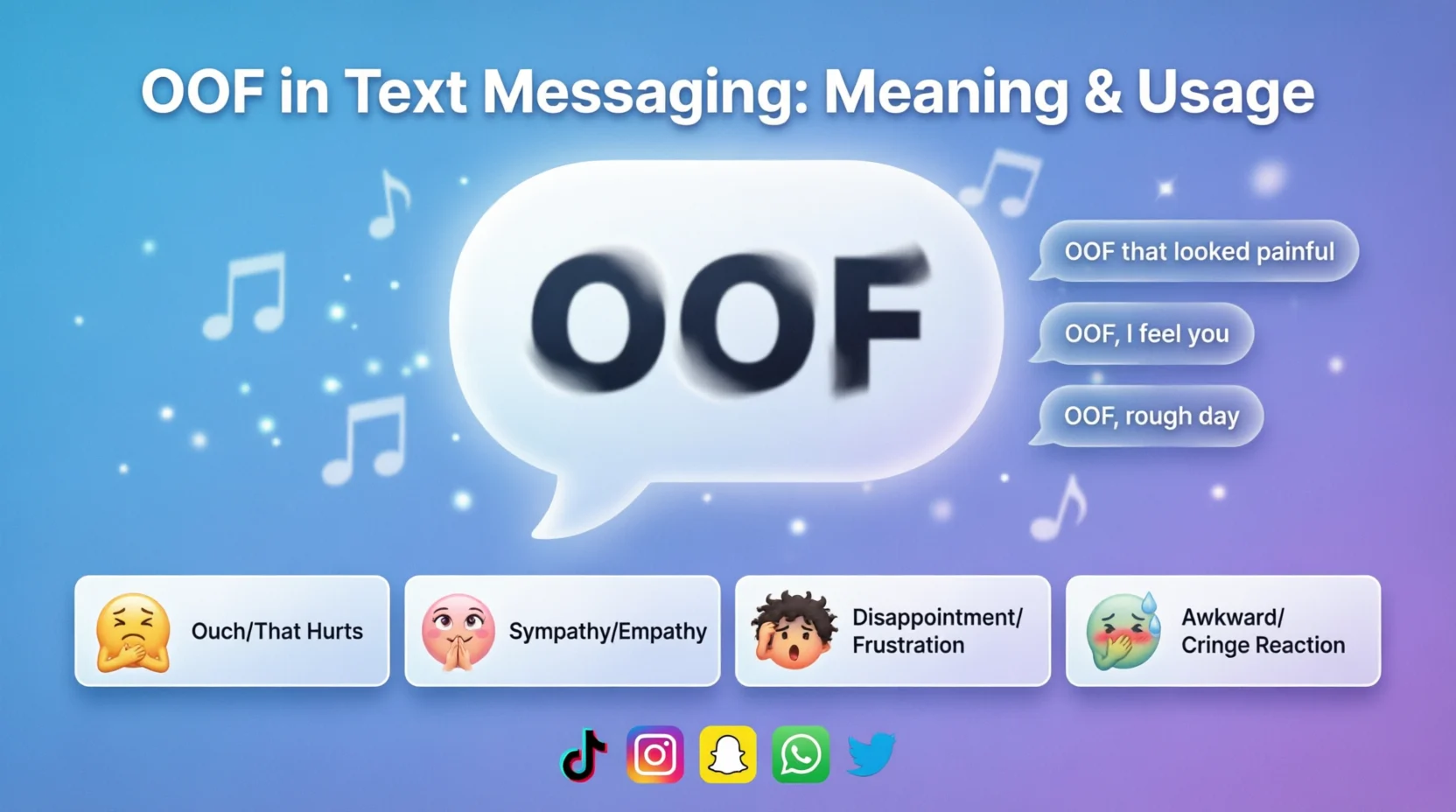
Have you ever seen someone comment “oof” online and wondered what it actually means? Maybe you spotted it in a gaming chat, TikTok comment section, or text conversation and felt confused. Don’t worry — you’re definitely not the only one. Internet slang changes fast, and words like “oof” can sound strange if you’re seeing them for the first time.
In today’s online world, “oof” has become one of the most common reaction words people use to respond to awkward moments, embarrassing situations, painful fails, or bad luck. From memes and social media to gaming communities and casual texting, this simple expression carries a surprising amount of emotion. In this guide, you’ll learn the real meaning of “oof,” where it came from, how people use it online, and the different situations where it makes perfect sense.
What Does “OOF” Mean?
The word “oof” is an internet slang expression people use to react to:
- Pain
- Embarrassment
- Bad luck
- Awkward moments
- Emotional damage
- Big mistakes
In simple words, it’s like saying:
- “That hurts.”
- “Yikes.”
- “That’s rough.”
- “Ouch.”
- “I feel bad for you.”
Sometimes it’s serious.
Sometimes it’s funny.
Most of the time, it’s both.
Simple Meaning of OOF in Text
The easiest way to understand oof is this:
👉 It’s a reaction word people use when something goes wrong.
Think of it as a quick emotional response.
For example:
- Your friend drops their phone.
- Someone gets rejected.
- A player loses badly in a game.
- Somebody posts an embarrassing story.
Instead of writing a long response, people simply type:
“oof”
That single word instantly shows sympathy, shock, or second-hand embarrassment.
Where Did “OOF” Come From?
Interestingly, oof existed long before modern internet slang.
People have used similar expressions for years to react to pain or impact. But the online version became massively popular because of gaming culture.
The Roblox Connection 🎮
One major reason “oof” became famous online was because of the game Roblox.
For years, when a character died in Roblox, it made a funny sound effect:
“OOF!”
Gamers loved it. Memes exploded everywhere. Soon, people started using “oof” in chats and comments even outside gaming.
The word eventually became part of mainstream internet language.
What Does OOF Mean on Social Media?
On social media, “oof” usually reacts to:
- Cringe moments
- Fails
- Sad situations
- Awkward posts
- Funny mistakes
Example:
Post:
“I accidentally sent a love message to my boss instead of my girlfriend.”
Reply:
“OOF 💀”
Meaning:
“That’s painfully embarrassing.”
Different Meanings of OOF Depending on Context
One interesting thing about internet slang is that meaning changes based on tone and situation.
Here are the most common meanings of “oof.”
1. OOF = “That Must Hurt”
This is the most common meaning.
Example:
“I studied all night and still failed.”
Reply:
“Oof.”
Meaning:
“I feel bad for you.”
2. OOF = Cringe or Embarrassment
Sometimes people use it when something feels awkward.
Example:
“He proposed and she said no in front of everyone.”
Reply:
“OOF 😭”
Meaning:
“That’s painfully embarrassing.”
3. OOF = Shock Reaction
It can also mean surprise after hearing bad news.
Example:
“My laptop crashed before I saved the project.”
Reply:
“Oof, that’s terrible.”
4. OOF = Funny Failure
In gaming and memes, people often use it humorously.
Example:
“I jumped into the game and died in 2 seconds.”
Reply:
“OOF XD”
Meaning:
“That fail was hilarious.”
How People Use OOF in Daily Chats
Here are some realistic examples so you can understand how natural conversations look online.
Example 1: School Situation
Friend:
“I forgot today was exam day.”
Reply:
“Oof 😬”
Meaning:
“That’s bad.”
Example 2: Relationship Drama
Person:
“She left me on read for 3 days.”
Reply:
“OOF.”
Meaning:
“That hurts emotionally.”
Example 3: Gaming Chat
Player:
“I got eliminated instantly.”
Teammate:
“oof lol”
Meaning:
“That was a rough fail.”
Example 4: Work Mistake
Coworker:
“I accidentally emailed the wrong file to the client.”
Reply:
“Big oof.”
Meaning:
“That’s a major mistake.”
What Does “Big OOF” Mean?
You may also see people say:
- “Big oof”
- “Mega oof”
- “Massive oof”
These simply mean the situation is extra painful, awkward, or unfortunate.
Example:
“He got dumped on his birthday.”
Reply:
“BIG OOF.”
Meaning:
“That’s seriously rough.”
OOF Meaning in Gaming
Gaming communities use “oof” constantly.
Gamers type it when:
- Someone dies quickly
- A player fails badly
- A teammate makes a mistake
- Something unlucky happens
Example:
“I missed the final shot.”
Reply:
“oof”
It’s fast, casual, and instantly understood in gaming culture.
OOF on TikTok, Instagram & Memes
On platforms like TikTok and Instagram, “oof” is often connected to:
- Cringe videos
- Embarrassing fails
- Dark humor
- Meme culture
You’ll usually see it in comments.
Example:
A video shows someone slipping in public.
Comments:
“OOF 😭”
This means viewers feel the second-hand embarrassment or pain.
Is OOF Positive or Negative?
This depends on context.
Usually Negative ⚠️
Most of the time, “oof” reacts to something bad or awkward.
Sometimes Playful 😄
Friends also use it jokingly.
Example:
“You still use that old phone? Oof.”
This may be teasing, not serious.
OOF vs Similar Internet Slang
Here’s how “oof” compares to other online reactions.
| Slang | Meaning | Tone |
|---|---|---|
| OOF | Pain, awkwardness, bad luck | Sympathetic/funny |
| Yikes | Shock or discomfort | More judgmental |
| LOL | Laughing | Funny only |
| Bruh | Disbelief/frustration | Casual reaction |
| RIP | Something failed badly | Dramatic/funny |
When Should You Use OOF?
You can use “oof” when:
✅ Someone shares bad news
✅ A fail or mistake happens
✅ Something feels awkward
✅ A situation is painfully funny
✅ Reacting casually online
When You Should NOT Use OOF
Even though it’s common slang, there are situations where it’s inappropriate.
Avoid using “oof” when:
❌ Someone is discussing serious trauma
❌ A situation is extremely emotional
❌ Professional communication is involved
❌ You’re speaking formally
For example, replying “oof” to very serious personal news may seem insensitive.
Is OOF Rude?
Usually, no.
But tone matters a lot online.
Friendly Use:
“Oof, that exam sounded brutal.”
This feels supportive.
Rude Use:
“OOF you’re terrible at this game.”
This sounds mocking.
So always consider the situation and your relationship with the person.
Why Is OOF So Popular?
There are several reasons why internet users love this word.
1. It’s Short and Fast
Typing “oof” is easier than writing a full sentence.
2. It Expresses Emotion Quickly
One word can show sympathy, cringe, shock, and humor at the same time.
3. Meme Culture Helped It Grow
Memes made “oof” recognizable across platforms.
4. Gaming Communities Spread It Everywhere
Gamers helped turn it into mainstream internet slang.
Common Variations of OOF
People often modify the word for emphasis.
Examples:
- big oof
- mega oof
- oof lol
- oof 😭
- OOFFFF
Each version increases emotion or exaggeration.
Common Misunderstandings About OOF
Let’s clear up some confusion.
“OOF Is an Acronym”
Nope.
It’s not short for anything.
Unlike “LOL” or “BRB,” “oof” is simply a reaction expression.
“Only Gamers Use OOF”
Not anymore.
While gaming helped popularize it, now it appears everywhere:
- TikTok
- Twitter/X
- Snapchat
- Discord
- YouTube comments
“OOF Means Laughing”
Not exactly.
It can include humor, but the main emotion is usually:
- pain
- embarrassment
- sympathy
- awkwardness
Real-Life Situations Where OOF Fits Perfectly
Here are relatable moments where people naturally use “oof.”
🔥 Sports
“Missed the winning penalty.”
Reply:
“Oof.”
📱 Social Media
“Accidentally liked a 5-year-old photo.”
Reply:
“BIG OOF.”
🎓 School
“Teacher caught me cheating.”
Reply:
“oof 😭”
💔 Dating
“They said they only see me as a friend.”
Reply:
“Oof man…”
🎮 Gaming
“Disconnected during finals.”
Reply:
“Mega oof.”
Pro Tips for Using OOF Naturally
Want to sound normal online instead of awkward? Here are useful tips.
✅ Keep It Casual
“oof” works best in relaxed conversations.
✅ Add Emojis for Tone
Examples:
- oof 😭
- oof lol
- big oof 💀
This makes your emotion clearer.
✅ Don’t Overuse It
Using “oof” constantly can sound repetitive.
✅ Understand Context
Sometimes people use it supportively.
Sometimes sarcastically.
Learn the tone before replying.
Is OOF Still Popular in 2026?
Yes, although internet slang changes constantly.
While newer slang appears every year, “oof” remains popular because it’s:
- simple
- versatile
- funny
- easy to understand
It’s especially common in:
- gaming culture
- meme communities
- casual texting
Even if trends change, “oof” still survives because people instantly understand it.
Final Thoughts
The internet is full of strange slang words, but “oof” is actually one of the easiest to understand once you see it in action.
At its core, it’s just a quick reaction to pain, embarrassment, awkwardness, or bad luck.
Sometimes it’s sympathetic.
Sometimes it’s funny.
Sometimes it’s both at once.
And honestly, that’s why people love using it.
So the next time you see someone type:
“big oof”
You’ll instantly know they mean:
“Wow… that’s rough.” 😬
FAQs
What does OOF mean in texting?
In texting, “oof” is a reaction word showing pain, embarrassment, sympathy, or awkwardness after something unfortunate happens.
Is OOF rude?
Usually no. It’s mostly casual slang. However, using it during serious emotional situations may sound insensitive.
What does “big oof” mean?
“Big oof” means a situation is extremely embarrassing, painful, awkward, or unlucky.
Is OOF still popular?
Yes. It’s still widely used in gaming, memes, TikTok comments, and casual online conversations.
Does OOF stand for something?
No. “Oof” is not an acronym or abbreviation. It’s simply an internet reaction expression.
descover more post
MM Means What The Surprising Text Meaning You’ve …
Ooof Meaning Explained Why Everyone’s Saying It 2026
Bih Meaning Explained Why Everyone’s Using This Slang …

M. Khan is the writer behind ClearlyMeaning, where he breaks down difficult words and trending internet slang into simple, clear explanations. Known for his hardworking approach and attention to detail, he aims to make understanding language easy and stress-free for readers worldwide.