
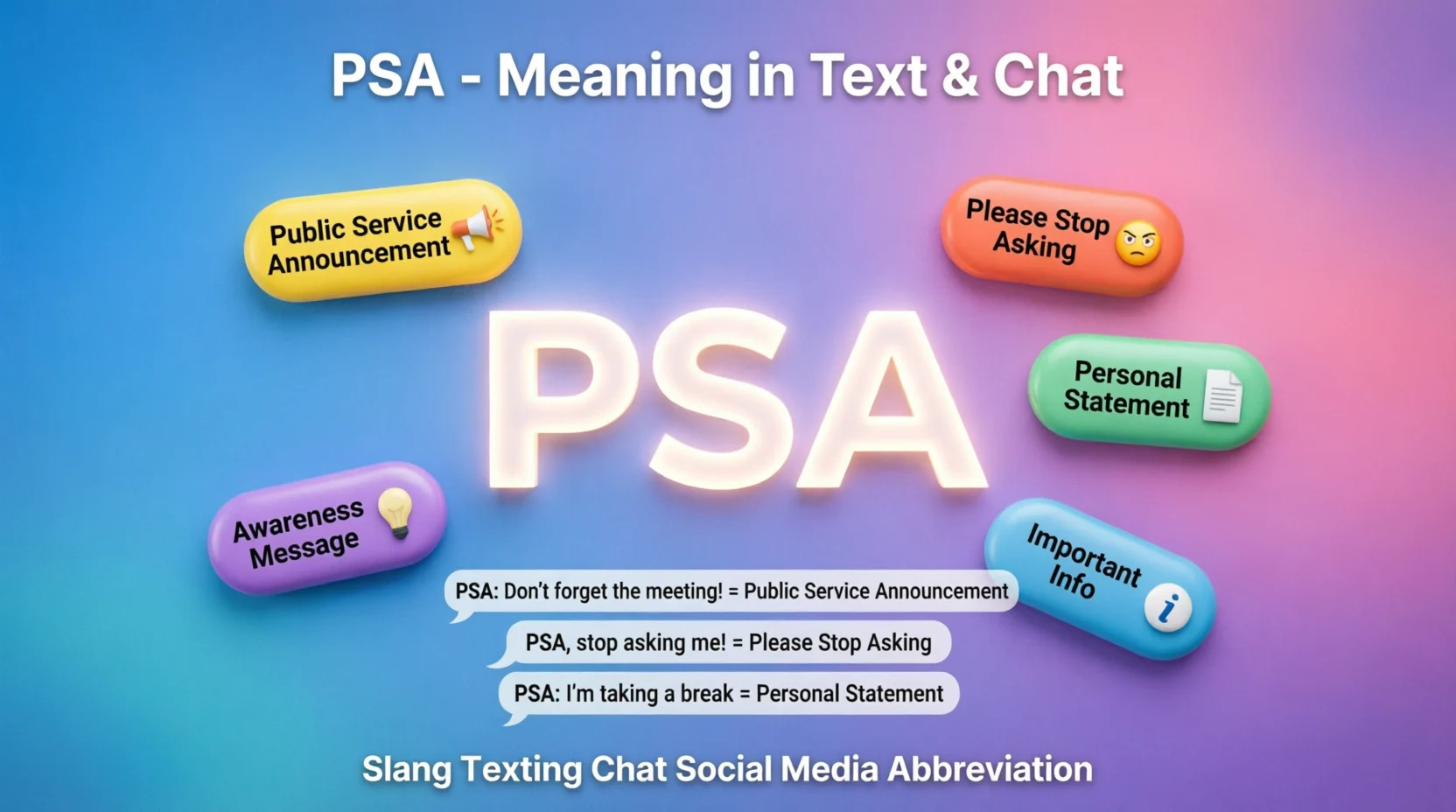
Have you ever been scrolling through social media, reading a text message, or browsing comments online when someone suddenly writes “PSA” and you have no idea what they mean?
You’re not alone.
Internet slang changes quickly, and new abbreviations appear all the time. Some are easy to understand, while others leave people confused. One term that frequently appears on social media, in group chats, and across online communities is PSA.
But what exactly does PSA mean in slang? Is it different from its traditional meaning? When should you use it, and when should you avoid it?
In this guide, you’ll learn the real meaning of PSA, how people use it online, examples from everyday conversations, and why this simple abbreviation has become so popular on the internet.
Let’s break it down.
What Does PSA Mean in Slang?
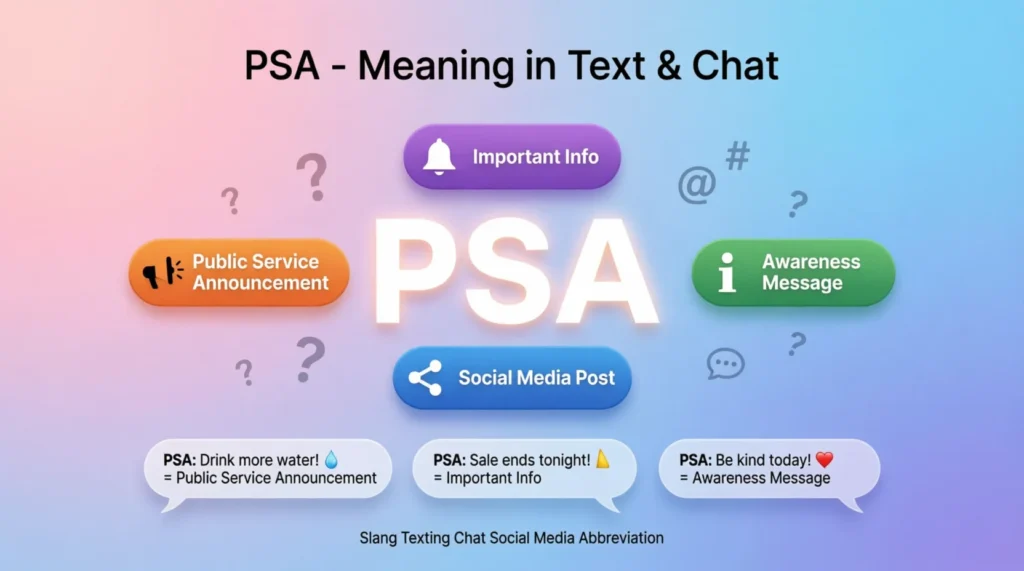
PSA stands for “Public Service Announcement.”
In traditional media, a public service announcement is an important message shared with the public to inform, educate, or warn people about something.
However, in internet slang and texting culture, the meaning has evolved slightly.
Today, people often use PSA before sharing a helpful reminder, important information, warning, opinion, or piece of advice with a group of people.
Quick Definition
PSA (slang): A phrase used before sharing important information, advice, a warning, or a reminder that people should know.
For example:
PSA: Don’t forget to back up your files before updating your computer.
In this example, the person is making an announcement they believe will help others.
The Origin of PSA
The term PSA existed long before social media.
For decades, television stations, radio broadcasters, schools, and government organizations used public service announcements to spread important messages.
Examples included:
- Road safety reminders
- Health awareness campaigns
- Emergency alerts
- Community information
As internet culture developed, users adopted the abbreviation and started using it casually online.
Instead of official announcements, people began using PSA to introduce:
- Helpful tips
- Personal advice
- Warnings
- Online etiquette reminders
- Trending information
The core idea remained the same: sharing information for the benefit of others.
PSA Meaning in Text Messages
In text conversations, PSA usually introduces something the sender considers useful or important.
Examples:
Friend 1: I’m thinking about downloading that app.
Friend 2: PSA: It drains your battery really fast.
Here, PSA signals that useful information is coming.
Another example:
PSA: The coffee shop closes at 6 PM today.
The sender wants everyone to know about a schedule change.
In texting, PSA often saves time because readers immediately recognize that an important message follows.
PSA Meaning on Social Media
Social media platforms have made PSA more popular than ever.
People frequently use it on:
- X (formerly Twitter)
- TikTok
- Snapchat
- Discord
You’ll often see PSA used before:
- Safety warnings
- Product recommendations
- Helpful life tips
- Community reminders
- Trend explanations
Example:
PSA: Not every viral video you see online is real.
Or:
PSA: Drink water before your third cup of coffee today.
These posts are usually meant to help followers, friends, or community members.
Why Do People Use PSA Online?
There are several reasons why PSA has become a popular internet slang term.
It Grabs Attention
When readers see “PSA,” they immediately expect useful information.
This increases the chances that people will continue reading.
It Creates Urgency
A PSA often sounds important.
It signals that the message may benefit others or prevent a problem.
It’s Short and Convenient
Typing “PSA” is much faster than writing “important announcement” every time.
It Feels Community-Oriented
Using PSA suggests you’re sharing information to help others, not just yourself.
Real-Life PSA Examples
Let’s look at some common examples you might encounter online.
Example 1: Technology
PSA: Always enable two-factor authentication on important accounts.
This warns people about online security.
Example 2: Shopping
PSA: That huge sale ends tonight at midnight.
This informs others about a time-sensitive deal.
Example 3: Health
PSA: Take breaks from screens every hour to reduce eye strain.
This provides helpful advice.
Example 4: Travel
PSA: Airport security lines are extremely long this weekend.
This warns travelers about possible delays.
Example 5: Social Media
PSA: Check sources before sharing breaking news.
This encourages responsible online behavior.
How PSA Is Used in Different Online Communities
Different online groups may use PSA in slightly different ways.
Gaming Communities
Gamers often use PSA to share useful information.
Example:
PSA: The game servers will be offline for maintenance tonight.
Workplace Chats
In professional messaging apps, PSA can introduce important reminders.
Example:
PSA: Team meeting starts 30 minutes earlier tomorrow.
Student Groups
Students often use PSA for schedules and deadlines.
Example:
PSA: Assignment submissions close at midnight.
Online Forums
Forum users may use PSA to warn others about scams or common mistakes.
Example:
PSA: Be careful of fake customer support accounts.
PSA vs Other Popular Internet Terms
Many people confuse PSA with similar online abbreviations.
Here’s how they compare.
| Term | Meaning | Purpose |
|---|---|---|
| PSA | Public Service Announcement | Share important information |
| FYI | For Your Information | Provide information casually |
| BTW | By The Way | Add extra information |
| IMO | In My Opinion | Express a personal opinion |
| TIL | Today I Learned | Share something newly learned |
PSA vs FYI
This comparison causes the most confusion.
FYI simply shares information.
Example:
FYI: The meeting room changed.
PSA emphasizes that the information may help or affect multiple people.
Example:
PSA: The parking lot is closed today.
PSA generally feels more important.
Is PSA Always Serious?
No.
While PSA can introduce serious warnings, people often use it humorously as well.
Funny example:
PSA: Looking in the fridge every five minutes won’t create new snacks.
Another example:
PSA: Sleeping at 3 AM is not a personality trait.
These jokes mimic official announcements while delivering humorous observations.
This playful use is extremely common on social media.
When Should You Use PSA?
Using PSA is appropriate when you want to share information that could help multiple people.
Good situations include:
- Giving reminders
- Sharing warnings
- Offering useful tips
- Informing a group
- Explaining important updates
Examples:
- PSA: Bring an umbrella today.
- PSA: Save your work before restarting.
- PSA: Registration closes tomorrow.
When You Should Avoid Using PSA
Although PSA is common online, it doesn’t fit every situation.
Avoid using PSA when:
- Talking one-on-one about personal matters
- Writing formal business documents
- Sending academic papers
- Communicating with people unfamiliar with internet slang
In highly professional settings, writing the full message often sounds clearer.
Common Misunderstandings About PSA
PSA Doesn’t Mean Personal Opinion
Many users assume PSA means someone is simply expressing an opinion.
While opinions can appear in a PSA, the term itself means an announcement meant to help others.
PSA Isn’t Always Official
Some people believe only governments or organizations can issue PSAs.
On the internet, anyone can use PSA before sharing useful information.
PSA Isn’t New Slang
Although it feels modern online, the term has existed for decades through traditional media.
Social media simply gave it a new style of use.
Why PSA Remains Popular in 2026
Internet slang comes and goes quickly.
Yet PSA continues to survive because it’s practical.
People constantly need a quick way to signal:
- Important information
- Helpful reminders
- Warnings
- Advice
PSA accomplishes all of these goals with just three letters.
Its simplicity makes it useful across generations, platforms, and online communities.
Unlike some slang terms that become outdated, PSA still serves a clear purpose.
Pro Tips for Using PSA Correctly
Keep the Message Helpful
The best PSAs provide value to readers.
Be Clear
Get to the point quickly.
Example:
PSA: Save your files before installing updates.
Avoid Overusing It
If every message starts with PSA, readers may stop paying attention.
Match the Audience
Use PSA when speaking to groups rather than individuals whenever possible.
Consider the Tone
PSA can be serious, helpful, or humorous depending on the situation.
Final Thoughts
Understanding PSA meaning slang is surprisingly useful because the term appears everywhere online.
At its core, PSA stands for Public Service Announcement, but in modern texting and social media culture, it usually introduces important information, reminders, advice, or warnings intended to help others.
Whether you’re reading social media posts, chatting with friends, participating in online communities, or browsing discussion forums, you’ll likely encounter PSA regularly.
Now that you know what it means, you’ll immediately understand the message that follows—and you can confidently use it yourself when sharing helpful information with others.
Frequently Asked Questions
What does PSA mean in text?
PSA means Public Service Announcement. In texting, it’s used before sharing important information, advice, reminders, or warnings.
Is PSA considered internet slang?
Yes. While PSA originally came from traditional media, it has become a widely used internet slang term on social media and messaging platforms.
What is an example of PSA in a sentence?
Example:
PSA: Don’t forget to charge your phone before traveling tomorrow.
Is PSA the same as FYI?
No. FYI simply provides information, while PSA usually emphasizes information that could benefit or affect multiple people.
Can PSA be used as a joke?
Yes. Many social media users use PSA humorously to introduce funny observations, opinions, or relatable situations.
descover more post
What Does SMD Full Form Slang Mean in Text Real Meaning Media …
What Does MM Mean in Text Real Meaning Examples 2026
What Does WYGG Mean in Text Real Meaning Examples 2026

M. Khan is the writer behind ClearlyMeaning, where he breaks down difficult words and trending internet slang into simple, clear explanations. Known for his hardworking approach and attention to detail, he aims to make understanding language easy and stress-free for readers worldwide.