
Have you ever seen SMS mentioned in your phone settings, a message, or an online conversation and wondered, “What’s SMS mean?” You’re not alone. This short abbreviation appears everywhere, from texting apps and mobile plans to business messages and verification codes.
The good news is that the meaning is actually very simple.
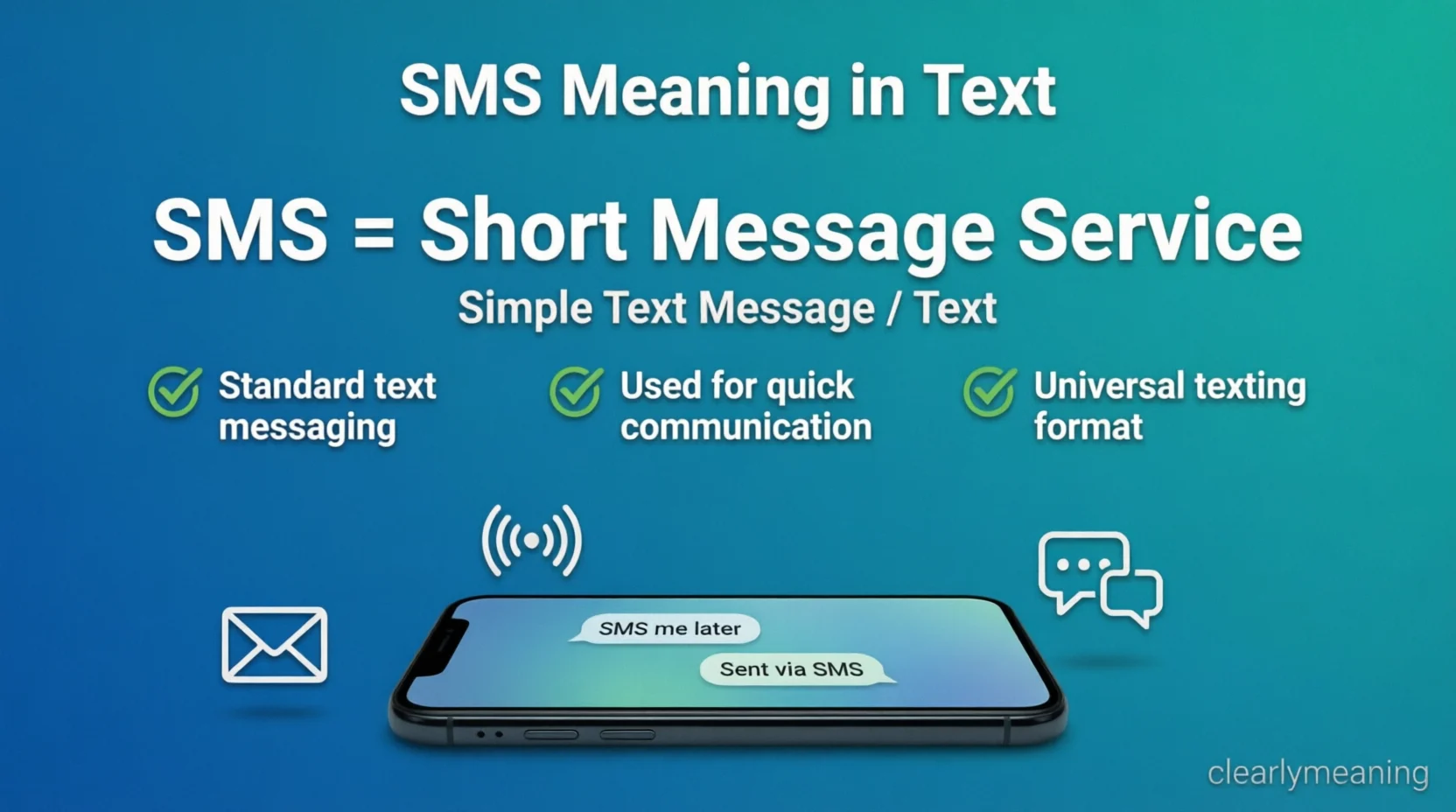
SMS stands for “Short Message Service.” It is the technology used to send and receive traditional text messages on mobile phones. When you send a regular text message using your phone number, there is a good chance you are using SMS.
But there’s more to SMS than just a technical abbreviation. Today, SMS is one of the most common ways people communicate, receive alerts, confirm accounts, and stay connected.
Let’s break down exactly what SMS means, how it works, where you see it, and how it differs from apps like WhatsApp and iMessage. 👇
What’s SMS Mean?
SMS means “Short Message Service.” It is a system that allows people to send short text messages from one mobile phone to another.
In simple words:
SMS is the standard technology behind traditional text messaging on mobile phones.
For example, when you open your phone’s regular messaging app and send a text to someone’s phone number, that message may be sent as an SMS.
Simple example
You send:
“Hey, are you coming tonight?”
to a friend’s phone number.
If the message is sent through your mobile carrier’s regular texting service, it is likely an SMS message.
Unlike internet-based messaging apps, traditional SMS usually does not require Wi-Fi or mobile data. Instead, it uses your cellular network.
What Does SMS Stand for?
The full form of SMS is:
Short Message Service
Each word explains something about the technology:
- Short – Traditional SMS messages were designed for short texts.
- Message – It is used to send written messages.
- Service – It is a communication service provided through mobile networks.
Although SMS was originally designed for short messages, modern phones and networks can sometimes support longer texts by splitting them into multiple messages or converting them into other formats.
SMS Meaning in Simple Words 📲
If someone asks, “What does SMS mean?”, the easiest answer is:
SMS is a regular text message sent through a mobile phone network.
Think of it as the classic form of texting that existed before popular apps like WhatsApp, Messenger, and Telegram became common.
When you text someone using only their phone number and your phone’s standard messaging system, you’re often using SMS.
A quick example
You: “I’ll be there in 10 minutes.”
Your friend: “Okay 👍”
If this conversation happens through your normal phone messaging service, those messages may be SMS texts.
Where Is SMS Used? 🌍
SMS is used in many different situations. You may use it every day without even thinking about the technology behind it.
1. Regular texting
The most common use of SMS is everyday communication.
People use SMS to:
- Say hello
- Make plans
- Ask questions
- Send reminders
- Share quick updates
- Communicate when internet access is unavailable
For example:
“Please call me when you get home.”
That could easily be sent as an SMS.
2. Verification codes
Many websites and apps send SMS verification codes when you sign up or log in.
You might receive a message like:
“Your verification code is 482913.”
This is commonly used to confirm that you have access to a particular phone number.
⚠️ Important: Never share a security or verification code with someone you do not trust.
3. Business notifications
Companies often use SMS to send important updates, such as:
- Appointment reminders
- Delivery updates
- Order confirmations
- Banking alerts
- Account notifications
- Travel information
For example:
“Your package will arrive today between 2 PM and 5 PM.”
That is a common example of an SMS notification.
4. Emergency alerts
In some locations, SMS or mobile alert systems are used to notify people about important emergencies, severe weather, or public safety announcements.
5. Marketing messages
Businesses may also send promotional text messages about:
- Discounts
- Sales
- Special offers
- New products
- Events
However, legitimate businesses should follow applicable laws and provide appropriate ways for people to opt out of unwanted messages.
Why Do People Use SMS?
SMS remains popular because it is simple, fast, and widely supported.
Here are some of the biggest reasons people continue to use it.
✅ It works without Wi-Fi
One of the biggest advantages of SMS is that it usually does not require an internet connection.
As long as you have mobile network coverage and texting service, you may be able to send a text.
This can be especially useful when:
- Wi-Fi is unavailable
- Mobile data is turned off
- You are traveling
- An internet app is not working
✅ Almost every mobile phone supports it
SMS is not limited to one specific brand or app.
You can usually text someone even if they have a completely different type of phone.
✅ It is quick
SMS messages are designed for fast communication. You can send a short message in just a few seconds.
✅ It is useful for important alerts
Businesses, banks, apps, and services often use SMS because text messages can reach people directly on their phones.
Real-Life Examples of SMS
Understanding examples can make the meaning much clearer.
Example 1: Everyday conversation
Person A: “Are you free this evening?”
Person B: “Yes, what’s up?”
If this conversation happens through a traditional phone texting service, it is an SMS conversation.
Example 2: Login verification
You try to log into an account and receive:
“Your one-time code is 738204.”
This is an example of an SMS verification message.
Example 3: Appointment reminder
“Reminder: Your appointment is scheduled for tomorrow at 10:00 AM.”
This is a typical business SMS.
Example 4: Delivery update
“Your order has been shipped and is expected to arrive Friday.”
Again, this is a common use of SMS.
Example 5: A casual message
“I’m outside. Come down when you’re ready 😂”
If sent through your phone’s regular texting service, this is also an SMS.
SMS vs Text Message: Are They the Same? 🤔
In everyday conversation, SMS and text message usually mean the same thing.
| Term | Meaning |
|---|---|
| SMS | The technical name for a traditional text messaging service |
| Text message | The casual everyday term people use for a mobile message |
| Texting | The act of sending text messages |
So, if someone says:
“I sent you an SMS.”
They usually mean:
“I sent you a text message.”
The difference is mostly about language. SMS sounds more technical, while text message sounds more natural in everyday conversation.
SMS vs MMS: What’s the Difference?
Many people confuse SMS with MMS, but they are not exactly the same.
SMS
SMS is mainly used for text messages.
Example:
“Hey, how are you?”
MMS
MMS stands for Multimedia Messaging Service.
It is designed to send multimedia content, such as:
- Pictures
- Videos
- Audio
- Longer multimedia messages
A simple way to remember the difference is:
- SMS = text
- MMS = multimedia
However, modern smartphones and messaging systems can make the difference less obvious because some phones automatically use newer messaging technologies.
SMS vs WhatsApp, Messenger, and Other Apps
SMS and internet messaging apps both allow you to send messages, but they work differently.
| Feature | SMS | WhatsApp / Messenger |
|---|---|---|
| Requires internet? | Usually no | Usually yes |
| Uses phone number? | Yes | Usually yes for account setup |
| Works with almost all phones? | Generally yes | App must be installed |
| Can send photos and videos? | Limited or may use MMS | Yes |
| Uses mobile carrier? | Yes | Uses internet |
| Group chats? | Supported, depending on system | Common |
Example
If you send a message through your regular phone texting app using the cellular network, it may be an SMS.
If you send a message through WhatsApp using Wi-Fi or mobile data, it is an internet message, not traditional SMS.
Is SMS the Same as iMessage?
No. SMS and iMessage are different technologies.
An iMessage is sent through Apple’s internet-based messaging system between compatible Apple devices.
SMS is the traditional mobile carrier texting service.
This is why you may sometimes see a message sent as SMS when an internet-based messaging service is unavailable.
In simple terms:
- SMS: Traditional mobile network text
- iMessage: Apple’s internet-based messaging service
When Should You Use SMS? ✅
SMS is useful when you need to send a quick message directly to someone’s phone.
You might use SMS when:
- You need to reach someone quickly
- You do not know which messaging app they use
- Internet access is unavailable
- You are sending a short, simple message
- You need to receive a verification code
- You want an appointment or delivery alert
Good SMS examples
“Running 10 minutes late.”
“Please call me when you’re free.”
“Your appointment is tomorrow at 3 PM.”
“I’m outside the building.”
SMS works best when your message is short, clear, and direct.
Common Misunderstandings About SMS ⚠️
Even though SMS is a simple concept, people often misunderstand a few things.
Misunderstanding 1: SMS always requires mobile data
Not necessarily.
Traditional SMS generally uses your mobile carrier’s cellular network rather than your regular internet connection.
However, the exact behavior can depend on your phone, carrier, and messaging settings.
Misunderstanding 2: Every message in a messaging app is SMS
No.
A message sent through WhatsApp, Facebook Messenger, Telegram, or another internet-based app is usually not a traditional SMS.
The app uses an internet connection instead.
Misunderstanding 3: SMS and MMS are exactly the same
They are different services.
SMS is primarily associated with text, while MMS supports multimedia content.
Misunderstanding 4: SMS only means personal texting
Not at all.
Businesses, banks, schools, delivery services, apps, and organizations all use SMS for notifications and communication.
Misunderstanding 5: Every text message is completely safe
Be careful. ⚠️
Scammers sometimes use text messages to send fake links, pretend to be banks, or request sensitive information.
Before clicking a link or sharing personal details, make sure the message is legitimate.
Pro Tips for Using SMS Safely 🔐
Whether you’re texting friends or receiving business alerts, these tips can help.
1. Never share verification codes
If you receive a code for your bank, email, or another account, keep it private.
A legitimate company should not normally ask you to give your security code to a stranger over the phone or in a message.
2. Be careful with unexpected links
Did you receive a message saying you won a prize or need to urgently confirm your account?
Don’t click immediately.
Check who sent it and whether the message looks suspicious.
3. Keep important texts clear
SMS is best for short communication.
Instead of sending a confusing paragraph, write your message clearly:
“I’ll arrive at 6 PM. Please wait outside.”
That is much easier to understand.
4. Check your mobile plan
Depending on your carrier and plan, SMS messages may have different costs or limitations.
If you’re traveling internationally, check your plan before sending large numbers of traditional text messages.
5. Don’t reply to suspicious messages
If a message looks like a scam, avoid responding. You can often block or report the sender through your phone.
What Does SMS Mean in a Phone Setting?
When you see SMS in your phone settings, it usually refers to traditional text messaging.
You may see phrases such as:
- Send as SMS
- SMS center
- SMS messages
- SMS delivery report
- SMS settings
These settings are related to your mobile carrier’s traditional texting service.
For example, if an internet messaging feature is unavailable, your phone may offer the option to send as SMS instead.
Why Do Businesses Still Use SMS?
Even with so many messaging apps available, SMS remains valuable for businesses.
Why? Because businesses can reach customers directly through their phone numbers without requiring them to download a specific app.
Companies may use SMS for:
- Appointment reminders
- Order updates
- Delivery notifications
- Security alerts
- Customer support
- Promotional messages
For many people, a text message is more noticeable than an email that may sit unread in an inbox.
What’s SMS Mean in a Chat?
If someone asks “What’s SMS mean?” in a chat or online conversation, they are usually asking about the abbreviation.
The answer is:
SMS means Short Message Service, which is the standard technology used for traditional text messages sent through mobile phone networks.
Sometimes people may use the word “SMS” simply to refer to a normal text message.
For example:
“I’ll send you an SMS.”
This usually means:
“I’ll send you a regular text.”
FAQ: What’s SMS Mean?
What does SMS stand for?
SMS stands for Short Message Service. It is the technology used to send traditional text messages through mobile phone networks.
Is SMS the same as texting?
In most everyday situations, yes. SMS is the technical term, while texting is the casual term people commonly use.
Does SMS need Wi-Fi?
Traditional SMS generally does not require Wi-Fi. It usually works through your mobile carrier’s cellular network. However, the exact experience can vary depending on your phone and carrier.
What is the difference between SMS and MMS?
SMS is primarily for text messages, while MMS is designed for multimedia messages, such as pictures, videos, and audio.
Final Thoughts 💬
So, what’s SMS mean? It means Short Message Service—the traditional system used to send text messages through mobile phone networks.
Whenever you send a regular text to someone’s phone number, you may be using SMS. It is simple, widely supported, and still important for personal communication, verification codes, business alerts, and notifications.
The easiest way to remember it is:
SMS = traditional mobile text messaging. 📱
Whether you’re texting a friend, receiving a login code, or getting a delivery update, SMS continues to play a major role in how people communicate every day.
descover more post
What Does WYF Meaning in Text Real Meaning Examples 2026
What Does What Does IK Mean in Text … – Clearly Meaning
What Does What Does POS Mean in Text Mean in Text Real …

Navo is the voice behind ClearlyMeaning, where he breaks down confusing words and trending internet slang into simple, clear explanations. Known for his hardworking approach and attention to detail, he aims to make learning meanings quick, easy, and stress-free for readers. His goal is to provide helpful content that truly adds value.