
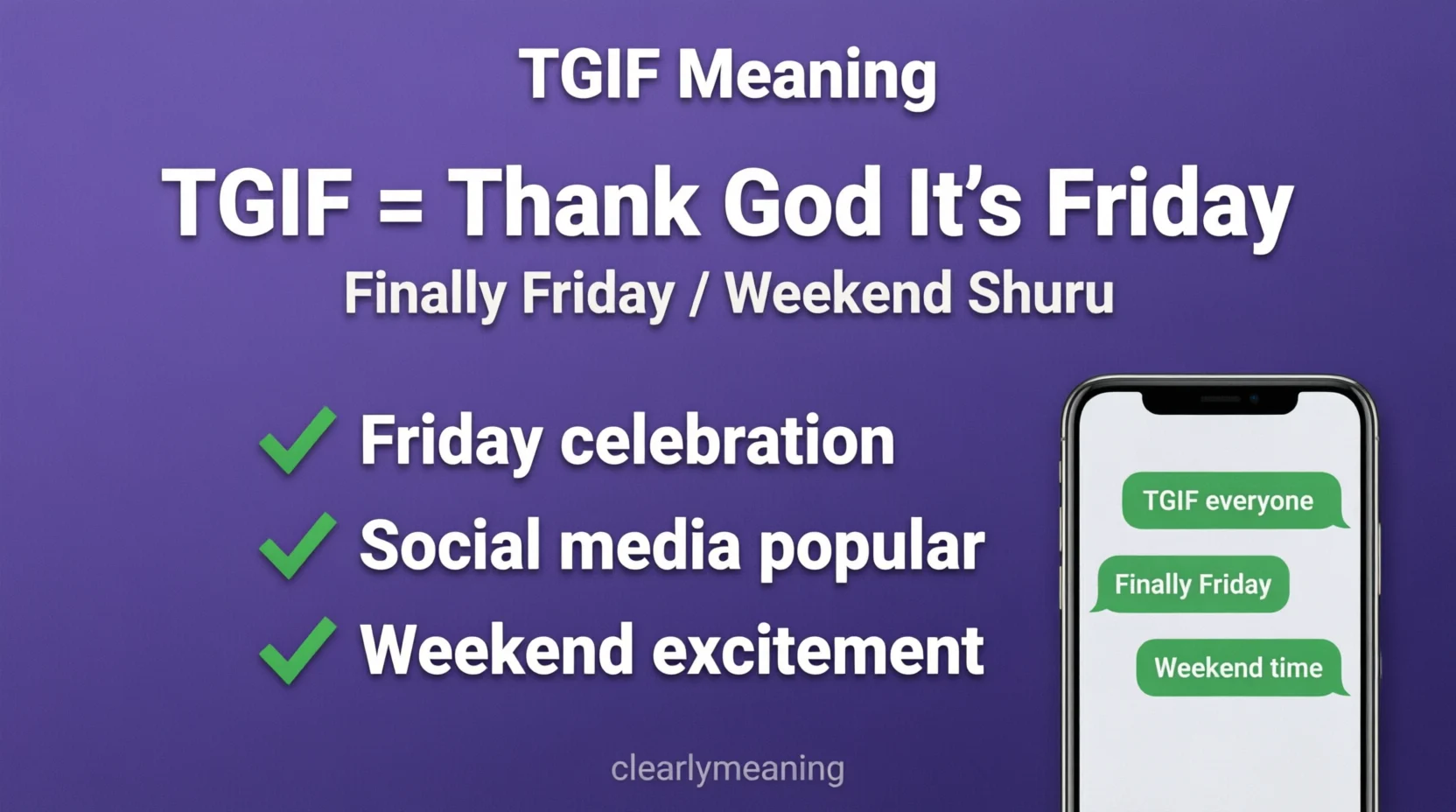
Have you ever seen someone post “TGIF!” on a Friday morning and wondered what they were talking about? Maybe you saw it in a text message, a social media caption, or a workplace chat and thought, “What does TGIF mean?” 🤔
You’re not alone. This short expression is one of the most recognizable Friday phrases on the internet. People use it to celebrate the end of the workweek, look forward to the weekend, or simply express relief that Friday has finally arrived.
In this guide, you’ll learn the TGIF meaning in text, where the phrase comes from, how people use it in conversations, and what it can mean on social media. You’ll also see realistic examples so you can understand exactly when it sounds natural to use.
What Does TGIF Mean in Text?
TGIF means “Thank God It’s Friday.”
People use this expression to show relief, excitement, or happiness that the work or school week is coming to an end and the weekend is about to begin.
For example:
“TGIF! I really needed this weekend.”
In this sentence, the person is happy that Friday has arrived after a long or tiring week.
Some people also use TGIF as “Thank Goodness It’s Friday” because they prefer a less religious version. The meaning is essentially the same: Friday has finally arrived, and the weekend is here. 🙌
Quick Definition
TGIF is a popular abbreviation for “Thank God It’s Friday.” In texts, chats, and social media posts, it expresses happiness or relief that the workweek is over and the weekend is beginning.
What Does “Thank God It’s Friday” Really Express?
At first glance, TGIF may seem like a simple phrase about Friday. But in everyday conversations, it often carries a little more emotion.
When someone writes TGIF, they might be saying:
- “This week was exhausting.”
- “I’m ready to relax.”
- “I’m excited for the weekend.”
- “I can finally take a break.”
- “I survived another busy week!”
- “I have fun plans coming up.”
The exact feeling depends on the context.
For one person, TGIF might mean they are going out with friends. For someone else, it might simply mean they are happy to sleep late on Saturday morning.
That’s why the expression remains popular. It is short, but it can communicate a very relatable feeling: the long week is finally over.
Why Do People Say TGIF?
There are several reasons people use this phrase so often.
1. It Celebrates the End of the Workweek
For many people, Monday through Thursday can feel busy and demanding. By Friday, they are ready for a break.
So, when Friday arrives, saying “TGIF” is a quick way to celebrate.
Example:
“TGIF! This week felt like it lasted forever.”
The person is not necessarily talking about a specific event. They are simply expressing relief that the week is ending.
2. It Shows Excitement About the Weekend
Friday is often associated with free time, social plans, travel, entertainment, and relaxation.
Someone might say:
“TGIF! Movie night tonight 🎬”
Here, the abbreviation shows excitement about the plans ahead.
3. It Creates a Relatable Feeling
Many people understand the feeling of waiting for the weekend. That makes TGIF an easy phrase to use in posts and conversations.
A Friday morning caption such as:
“Coffee in hand. TGIF ☕”
can instantly connect with other people who are also tired but happy that the weekend is near.
4. It Is Short and Easy to Type
Internet language is often about saving time. Instead of typing “Thank God it’s Friday”, people can simply write TGIF.
This is especially convenient in:
- Text messages
- Group chats
- Social media captions
- Workplace messaging apps
- Online comments
TGIF Meaning on Social Media
On social media, TGIF is usually used in a cheerful and casual way.
You might see it in a caption, comment, story, or status update.
Common social media examples include:
- TGIF! 🎉
- Finally Friday. TGIF!
- TGIF—time to relax.
- TGIF, who else is ready for the weekend?
- TGIF! Weekend mode activated 😎
The phrase is especially common on Friday mornings and afternoons when people are beginning to think about their plans.
On Instagram
Someone might post a picture of coffee, food, friends, or a night out with a caption such as:
“TGIF ✨”
The meaning is usually something like:
“It’s Friday, and I’m happy about it.”
On Facebook
People may use the abbreviation in a status update:
“TGIF! Hope everyone has a wonderful weekend.”
This can sound friendly and positive.
On TikTok
The phrase may appear in captions or comments related to:
- Weekend routines
- Funny work memes
- Friday celebrations
- Going-out videos
- School or workplace humor
On X or Other Social Platforms
Users may write:
“TGIF. I need two days to recover from this week.”
In this case, the expression may be humorous rather than purely celebratory.
TGIF in Text Messages and Chats
The TGIF meaning in texting is usually straightforward.
If someone sends:
“TGIF!”
they are probably happy that Friday has arrived.
However, the tone can change depending on the rest of the message.
Example 1: Excited
Friend: “TGIF! Are we still going out tonight?”
Meaning: The person is excited about the weekend and their plans.
Example 2: Relieved
Coworker: “TGIF. I’m completely exhausted.”
Meaning: The person had a difficult week and is relieved to have a break.
Example 3: Funny
Friend: “TGIF! Only 48 hours until Monday 😭”
Meaning: The person is joking about how quickly the weekend passes.
Example 4: Casual
You: “TGIF 😊”
Meaning: A simple, positive way to acknowledge Friday.
What Does TGIF Mean in Different Situations?
The phrase can have slightly different meanings depending on the situation.
At Work
In a workplace chat, TGIF usually means:
“I’m glad the workweek is ending.”
Example:
“TGIF, team! Great work this week.”
This can be friendly and appropriate in a casual workplace environment.
However, you may want to avoid it in highly formal communication, such as an official business report or a serious professional email.
At School
Students might use TGIF to express excitement about the weekend:
“TGIF! No homework tonight.”
The phrase can also be used jokingly when students are tired after a busy week.
Between Friends
Friends often use TGIF to talk about plans:
“TGIF! Dinner and a movie?”
Here, the expression is simply a cheerful introduction to a weekend plan.
In Family Chats
A family member might write:
“TGIF! Anyone want to have dinner together tonight?”
The phrase adds a relaxed and positive tone.
Is TGIF an Acronym or Abbreviation?
Technically, TGIF is commonly described as an initialism or acronym-like abbreviation formed from the first letters of the words:
- T = Thank
- G = God
- I = It’s
- F = Friday
People generally pronounce the individual letters: T-G-I-F.
In everyday internet language, most people simply call it a text abbreviation or acronym.
The important thing is not the technical label. The important thing is understanding what the expression communicates.
Does TGIF Always Mean “Thank God It’s Friday”?
Usually, yes.
The most common expansion is:
Thank God It’s Friday.
However, some people use:
Thank Goodness It’s Friday.
This version has the same basic meaning but avoids the religious reference to “God.”
Both expressions communicate the same general idea:
👉 “I’m happy or relieved that Friday has arrived.”
The meaning is normally easy to understand from context.
TGIF Examples in Real Conversations
Here are some natural examples of how people might use the expression.
Example 1: After a Long Workweek
A: “How was your week?”
B: “So busy. TGIF!”
Meaning: The person is relieved that the week is over.
Example 2: Making Weekend Plans
A: “TGIF! What are you doing tonight?”
B: “Going out for dinner with friends.”
Meaning: The person is excited about Friday night.
Example 3: A Social Media Caption
“TGIF! Time to put the laptop away and enjoy the weekend. 🎉”
Meaning: The person is celebrating the end of work for the week.
Example 4: A Funny Message
“TGIF! I survived Monday, Tuesday, Wednesday, Thursday, and somehow Friday too.”
Meaning: The person is joking about getting through a tiring week.
Example 5: A Relaxing Weekend
“TGIF. My weekend plans are doing absolutely nothing.”
Meaning: The person is happy to relax at home.
Example 6: School Context
“TGIF! No classes tomorrow!”
Meaning: The student is excited about having free time.
TGIF vs Similar Expressions
Several other expressions can communicate a similar feeling.
| Expression | Meaning | Tone |
|---|---|---|
| TGIF | Thank God It’s Friday | Excited or relieved |
| Finally Friday | Friday has arrived at last | Casual |
| Weekend mode | Ready to relax and enjoy the weekend | Playful |
| Happy Friday | A cheerful Friday greeting | Friendly |
| LOL | Laughing out loud | Humorous |
| Yay, Friday! | Excitement about Friday | Very casual |
TGIF vs “Happy Friday”
These expressions are similar, but they are not exactly the same.
“Happy Friday” is usually a greeting or positive wish.
“TGIF” often expresses personal relief or excitement.
For example:
“Happy Friday! Hope you have a great day.”
This sounds like a friendly greeting.
“TGIF! I need a break.”
This sounds more like relief after a tiring week.
When Should You Use TGIF?
You can use TGIF in casual situations when you want to express happiness or relief about Friday.
Good situations include:
✅ Texting friends
✅ Group chats
✅ Social media captions
✅ Casual workplace conversations
✅ Gaming chats
✅ Online comments
✅ Weekend planning
For example:
“TGIF! Anyone free for dinner tonight?”
This sounds natural and friendly.
When Should You Avoid Using TGIF?
Although the phrase is widely understood, it is not suitable for every situation.
You may want to avoid it in:
⚠️ Formal business documents
⚠️ Academic assignments
⚠️ Official applications
⚠️ Serious professional correspondence
⚠️ Formal reports
For example, writing “TGIF!” in a formal business proposal would probably seem too casual.
Instead, you could simply say:
“I hope you have a pleasant weekend.”
The best choice always depends on your audience and the situation.
Common Misunderstandings About TGIF
Misunderstanding 1: TGIF Is Only Used by Religious People
Not necessarily.
Although the original phrase includes the word “God,” many people use it as a common expression without intending to make a religious statement.
Some people also interpret it as:
“Thank Goodness It’s Friday.”
Misunderstanding 2: TGIF Means Someone Hates Their Job
Not always.
A person may genuinely enjoy their job and still be excited for the weekend.
Saying TGIF usually means someone is ready for a change of pace or some free time.
Misunderstanding 3: It Can Only Be Used on Friday Morning
No.
You can use it throughout Friday.
For example:
- Friday morning: “TGIF!”
- Friday afternoon: “TGIF, almost done!”
- Friday evening: “TGIF! Let the weekend begin.”
The closer the weekend feels, the more natural the expression may seem.
Misunderstanding 4: TGIF Is Always Serious
Not at all.
People often use it humorously.
For example:
“TGIF! Now I only have three days to recover before Monday.”
This is clearly a joke about the short weekend.
How to Use TGIF Naturally 💡
If you want your messages to sound natural, follow a few simple tips.
1. Match the Context
Use TGIF when the conversation is casual and the mood is relaxed.
2. Add a Personal Detail
Instead of simply writing:
“TGIF!”
you can say:
“TGIF! I’m ready for pizza and a movie 🍕🎬”
This makes the message feel more personal.
3. Use Emojis When Appropriate
Common emojis that work well with TGIF include:
- 🎉
- 🙌
- 😎
- 🥳
- 🍻
- ☕
- 🎬
For example:
“TGIF! Weekend plans are officially starting 🎉”
4. Don’t Force It
You do not need to use TGIF just because it is Friday.
If you are having a difficult or serious conversation, the expression may feel out of place.
5. Remember Your Audience
A close friend will understand “TGIF!” immediately.
A formal client or older professional audience may prefer more traditional language.
Popular Variations of TGIF
People sometimes create playful variations of the phrase.
“TGIF!”
The classic version.
“TGIF 🎉”
Adds excitement.
“TGIF, finally!”
Shows extra relief.
“TGIF mood”
Often used as a social media caption.
“TGIF vibes”
Usually refers to a relaxed, happy Friday feeling.
“TGIF weekend mode”
Combines the expression with the idea of relaxing after work or school.
These variations are informal and often appear in captions, memes, and casual conversations.
Is TGIF Still Popular Today?
Yes, the expression remains widely recognizable.
While internet slang changes quickly, TGIF has remained popular because the feeling behind it is universal.
People still work, study, feel tired, make weekend plans, and look forward to relaxing. That makes the phrase easy to understand across different generations.
You may see it less often in some online communities where newer slang is preferred, but it remains a familiar expression in texting, social media, workplace conversations, and everyday speech.
Why Short Expressions Like TGIF Matter Online
Internet language is not only about saving characters.
Short expressions can also communicate emotions quickly.
When someone writes:
“TGIF 😭”
you may immediately understand that they had a long week.
When someone writes:
“TGIF 🥳”
you can probably guess they are excited about their plans.
That is what makes expressions like this useful. They combine meaning and emotion in just a few letters.
TGIF in Memes and Humor
The expression is also common in memes about work and school.
A meme might show someone looking exhausted on Monday and celebrating on Friday.
The caption could say:
“Me all week: barely surviving. Me on Friday: TGIF!”
This kind of humor works because many people recognize the experience.
Another common joke is:
“TGIF! Wait… why is it already Sunday?”
The humor comes from the fact that the weekend often feels much shorter than the workweek.
Frequently Asked Questions
What does TGIF mean in text?
TGIF means “Thank God It’s Friday.” It is used in texts and online conversations to express happiness, excitement, or relief that Friday and the weekend have arrived.
What is the full form of TGIF?
The most common full form is “Thank God It’s Friday.” Some people also use “Thank Goodness It’s Friday,” which has the same general meaning.
Is TGIF slang?
TGIF is best described as a common informal abbreviation or expression. It is widely used in casual texts, social media posts, captions, and conversations.
Can I use TGIF in a professional message?
You can use it in a casual workplace chat if the environment is relaxed. However, it is better to avoid it in formal emails, reports, and official business communication.
Final Thoughts
So, what does TGIF means in text?
It means “Thank God It’s Friday,” and people use it to express happiness, excitement, or relief that the work or school week is finally coming to an end.
Whether you are celebrating a night out, looking forward to sleeping late, or simply happy to close your laptop for two days, TGIF is a quick and relatable way to share that feeling.
Next time you see someone post “TGIF!”, you’ll know exactly what they mean: Friday has arrived, and the weekend is finally here. 🎉
descover more post
What Does What Does POS Mean in Text Mean in Text Real …
What Does TBT Mean in Text Real Meaning Examples 2026
What Does WYF Meaning in Text Real Meaning Examples 2026

Navo is the voice behind ClearlyMeaning, where he breaks down confusing words and trending internet slang into simple, clear explanations. Known for his hardworking approach and attention to detail, he aims to make learning meanings quick, easy, and stress-free for readers. His goal is to provide helpful content that truly adds value.