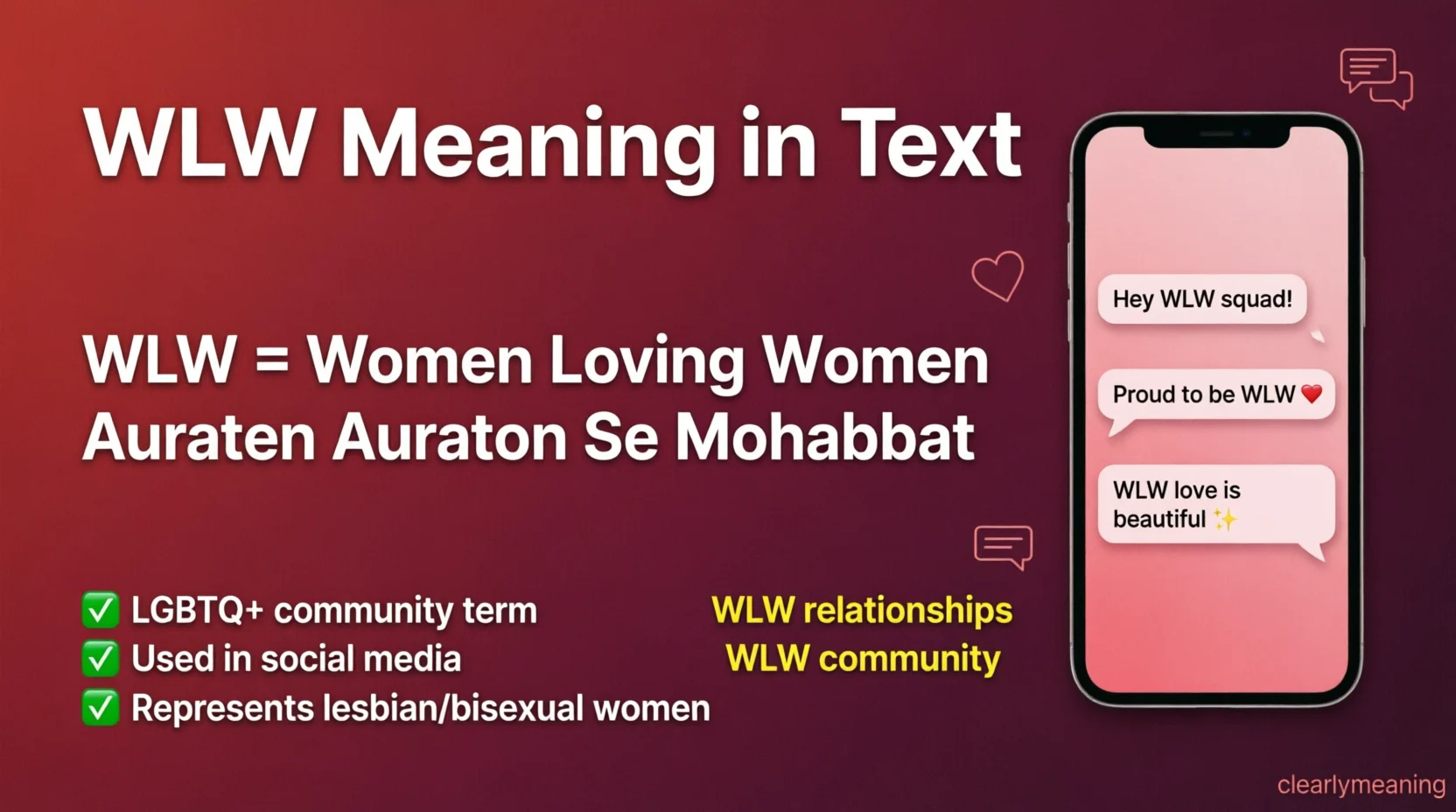
Have you ever seen “WLW” on TikTok, Instagram, X (Twitter), or in someone’s dating profile and wondered what it means?
You’re not alone.
Internet slang changes quickly, and some abbreviations can have different meanings depending on the context. WLW is one of those terms that appears in social media bios, online communities, conversations, and hashtags. If you don’t know what it stands for, it’s easy to feel confused.
In this guide, you’ll learn the WLW meaning, where people use it, why it’s popular, and how to understand it correctly with simple, real-life examples.
What Does WLW Mean?
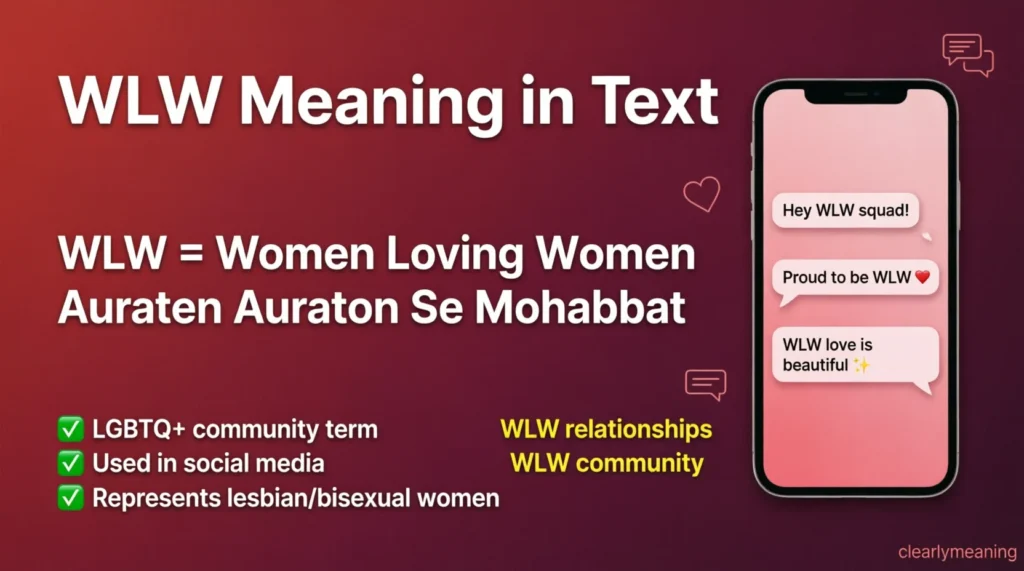
WLW stands for “Women Loving Women.”
It is an inclusive term used to describe women who are romantically or sexually attracted to other women.
The term can include:
- Lesbian women
- Bisexual women
- Pansexual women
- Queer women
- Other women who experience attraction to women
Unlike some labels that describe a specific sexual orientation, WLW is a broad umbrella term that focuses on attraction between women rather than one specific identity.
Quick Definition ✅
WLW means “Women Loving Women.” It refers to women who are romantically or sexually attracted to other women and is commonly used in online communities, social media, dating apps, and LGBTQ+ conversations.
WLW Meaning in Simple Words
Think of WLW as a way to describe women who like women.
Instead of focusing on a specific label, the abbreviation highlights shared experiences and attraction.
For example:
- A lesbian is considered WLW.
- A bisexual woman who dates women can also identify as WLW.
- A pansexual woman attracted to women may also use the term.
Because it’s inclusive, many people prefer using WLW when talking about communities, relationships, or experiences involving women attracted to women.
Where Is WLW Used?
You’ll find WLW in many places online and offline.
1. Social Media 📱
People use it in:
- TikTok videos
- Instagram captions
- X (Twitter) posts
- Threads
- Tumblr
Example:
“My favorite WLW movies always make me cry.”
2. Dating Apps ❤️
Many dating profiles include WLW to describe who they’re interested in dating.
Example:
“WLW | Coffee lover | Book addict”
3. LGBTQ+ Communities 🌈
Community groups often use WLW when discussing topics relevant to women attracted to women.
Example:
- WLW support groups
- WLW events
- WLW book clubs
4. Movies and TV Shows 🎬
Fans often describe relationships between female characters as WLW.
Example:
“This series has one of the best WLW romances.”
5. Online Forums
Communities on Reddit, Discord, Facebook, and other forums regularly use the term in discussions, recommendations, and personal stories.
Why Do People Use WLW?
There are several reasons why the abbreviation has become so common.
It’s Inclusive
Not everyone identifies with one specific label.
WLW allows people to describe attraction without limiting themselves to a single identity.
It’s Short and Easy
Typing WLW is much quicker than writing “women loving women” every time.
It Builds Community
Many people use the term to find others with similar experiences.
Examples include:
- WLW memes
- WLW books
- WLW podcasts
- WLW creators
- WLW events
It Makes Conversations Clear
Instead of listing several identities separately, people often use WLW when discussing topics that apply to many women attracted to women.
Real-Life Examples of WLW Meaning
Here are some common examples you’ll see online.
Example 1
Friend: Have you watched that new romance?
You: Yes! It’s one of my favorite WLW stories.
Meaning: The romance is between two women.
Example 2
Instagram Bio:
📚 Reader | Coffee Lover | WLW
Meaning:
The person is sharing that they are a woman attracted to women.
Example 3
TikTok Caption:
“Need more WLW recommendations!”
Meaning:
The creator wants recommendations for content featuring women loving women.
Example 4
Tweet:
“Looking for wholesome WLW movies.”
Meaning:
They’re searching for movies featuring romantic relationships between women.
Example 5
Book Review:
“One of the best WLW romances I’ve ever read.”
Meaning:
The story centers on a romantic relationship between women.
WLW vs Similar Terms
| Term | Meaning | Who It Includes |
|---|---|---|
| WLW | Women Loving Women | Inclusive umbrella term for women attracted to women |
| Lesbian | Woman attracted to women | Specific sexual orientation |
| Bisexual | Attraction to more than one gender | May include attraction to women and others |
| Pansexual | Attraction regardless of gender | Can also include attraction to women |
| Sapphic | Broad term for women attracted to women | Often overlaps with WLW |
The biggest difference is that WLW focuses on attraction between women, while the other words describe more specific identities or orientations.
When Should You Use WLW?
You can use WLW when talking about:
✅ Movies
✅ TV shows
✅ Books
✅ Dating
✅ Online communities
✅ Social media
✅ Shared experiences
Examples:
- “I’m looking for WLW romance novels.”
- “Do you know any good WLW podcasts?”
- “She posts lots of WLW content.”
Using the term respectfully helps keep conversations inclusive.
Common Misunderstandings About WLW
Many people misunderstand what WLW means.
Here are the most common myths.
Myth 1: WLW Only Means Lesbian
Not true.
Lesbians are included, but WLW also includes many other women attracted to women.
Myth 2: Every Woman Who Likes Women Uses WLW
Not everyone prefers this label.
Some people identify as:
- Lesbian
- Bisexual
- Pansexual
- Queer
- Another identity
Everyone chooses the label that feels right for them.
Myth 3: WLW Is Just Internet Slang
While it’s common online, it’s also widely used in community spaces, media discussions, and everyday conversations.
Myth 4: Men Can Be WLW
No.
The abbreviation specifically refers to women loving women.
Pro Tips for Using WLW Correctly 🔥
Keep these tips in mind.
- ✅ Use WLW respectfully.
- ✅ Remember it’s an umbrella term.
- ✅ Don’t assume everyone uses the same label.
- ✅ Consider the context before using internet abbreviations.
- ✅ If someone describes themselves differently, respect their preferred identity.
- ✅ Use the term naturally instead of forcing it into every sentence.
Why WLW Is So Popular Online
The internet has made it easier for people to connect with communities that share similar experiences.
As a result, terms like WLW have become common in:
- TikTok trends
- Fan communities
- Romance book recommendations
- Streaming discussions
- Online dating
- Podcasts
- YouTube videos
- Instagram reels
The abbreviation saves space while helping people quickly identify the type of content or community they’re talking about.
Final Thoughts
The WLW meaning is simple once you understand it. It stands for “Women Loving Women” and is an inclusive term for women who are romantically or sexually attracted to other women.
You’ll often see it on social media, dating apps, in books, TV discussions, and LGBTQ+ communities. While it includes lesbian women, it can also include bisexual, pansexual, queer, and other women who are attracted to women.
If you come across WLW online, you’ll now know exactly what it means and how it’s used in everyday conversations.
FAQs
What does WLW mean in texting?
In texting, WLW means “Women Loving Women.” People often use it when talking about relationships, dating, movies, books, or communities involving women attracted to women.
Is WLW the same as lesbian?
No. Lesbian is a specific sexual orientation, while WLW is a broader umbrella term that can include lesbian, bisexual, pansexual, queer, and other women who are attracted to women.
Where is WLW commonly used?
You’ll most often see WLW on TikTok, Instagram, X (Twitter), Reddit, dating apps, fan communities, blogs, and in discussions about books, TV shows, and movies.
Can bisexual women identify as WLW?
Yes. Many bisexual women who are attracted to women also identify with the broader WLW community, although personal preferences and identities vary from person to person.
descover more post
What Does What Does IK Mean in Text … – Clearly Meaning
GLHF Meaning in Text The Friendly Gaming Phrase Everyone …
TFW Meaning The Internet Slang Everyone Uses but Few Fully …

M. Khan is the writer behind ClearlyMeaning, where he breaks down difficult words and trending internet slang into simple, clear explanations. Known for his hardworking approach and attention to detail, he aims to make understanding language easy and stress-free for readers worldwide.